The Problem
Design teams at scale face a familiar tension: the craft demands deep focus, but the operational overhead - research synthesis, accessibility audits, documentation, wireframing, design system compliance - constantly pulls designers away from the work that actually matters.
As a design manager, I watched talented designers spend disproportionate time on repeatable, rule-bound tasks. The bottleneck wasn't skill or motivation. It was infrastructure.
The question I started with: What if we gave designers an always-available sidekick that already knows how we work?
The Idea: An Orchestrated Network of Design Agents
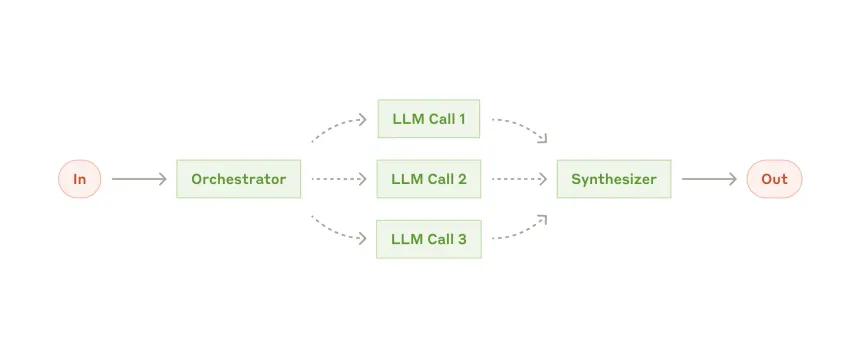
Rather than building a single AI tool, I saw an opportunity to architect a system - a hierarchy of specialized agents, each expert in a specific design discipline, coordinated by a top-level orchestrator that understands the designer's intent and routes work intelligently.
This became Ash - a design orchestrator trained on our team's processes, design system, research archives, and workflows.
The mental model: not one generalist AI, but a team of specialists with a smart manager on top.
Architecture: How It Works
Ash operates as an Agent of Agents - an orchestration layer built on top of a suite of purpose-built sub-agents, each with its own domain expertise and toolset.
The Orchestrator
Ash sits at the top of the stack. Designers interact with it through a natural language interface embedded directly into Cisco Secure Access - the product itself. Ash interprets intent, selects the right agent(s), and synthesizes results back to the designer.
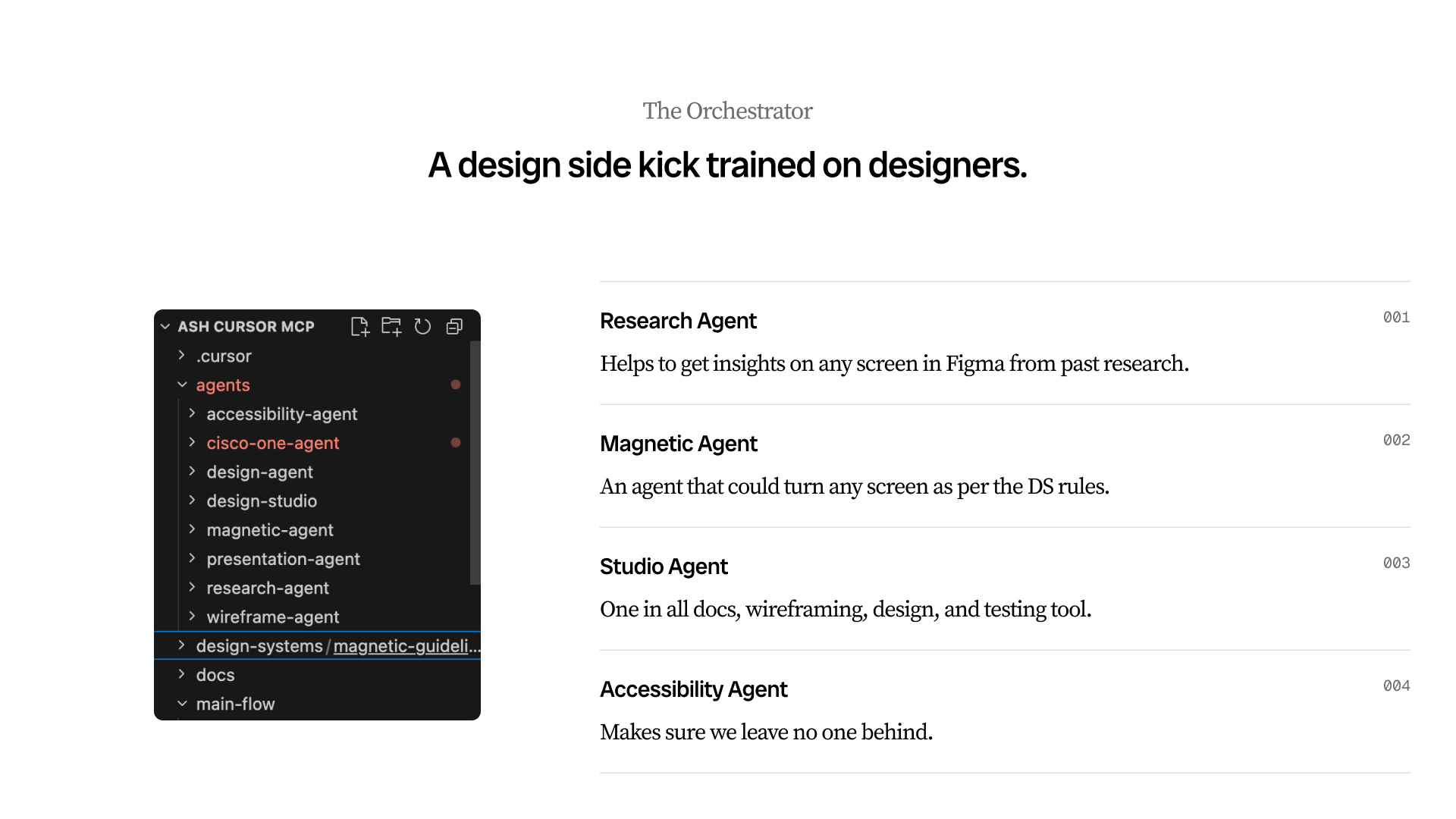
The Agent Suite
The Development Environment
The system was built and iterated in Cursor, using a custom MCP (Model Context Protocol) server called Ash Cursor MCP. This gave the agents access to our design system files, component tokens, brand guidelines, and work samples - effectively a curated context layer that made every agent's output feel native to our team's standards.
Agents could spin up local servers, render prototypes to localhost (deployed on vercel and supabase), and iterate in real time - collapsing the gap between ideation and reviewable artifact.
Design Decisions That Mattered
Embedding in the Product, Not Next to It
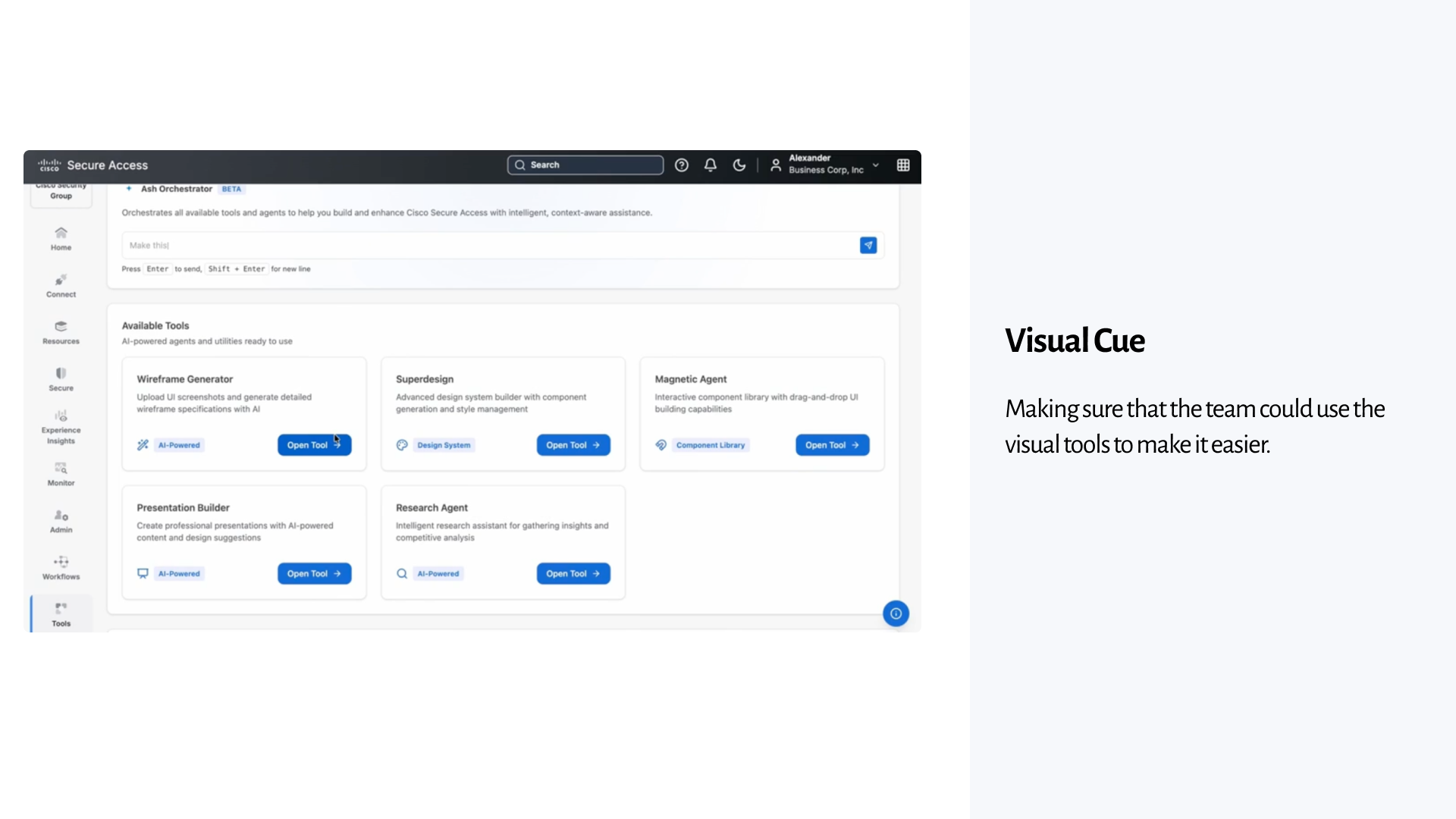
Instead of building a standalone tool that designers would have to context-switch to, Ash lives inside Cisco Secure Access under a dedicated Tools panel. Designers encounter it in their natural workflow - no friction to entry.
Visual Cues and Discoverability
The available tools are surfaced as cards with clear labels, capability descriptions, and a single CTA ("Open Tool"). The goal was to make the system feel like a toolkit, not a black box - empowering designers to understand what's available and choose deliberately.
Grounding Agents in Real Team Knowledge
A key design principle was that Ash shouldn't feel generic. By training agents on our actual design system guidelines, component libraries, accessibility standards, and research history, outputs felt like they came from a colleague who knows our work - not from a generic AI.
Process: How We Built It
The project started as a hackathon entry - a proof of concept that Ash could answer design questions grounded in real Figma context. Winning that hackathon gave us the mandate to build further.
From there, development followed a tight loop:
- Identify the highest-friction design tasks through team observation and direct feedback
- Build a focused agent for that task with the right context and tools
- Embed it into the orchestrator and expose it through the product UI
- Measure adoption and quality - did designers reach for it again?
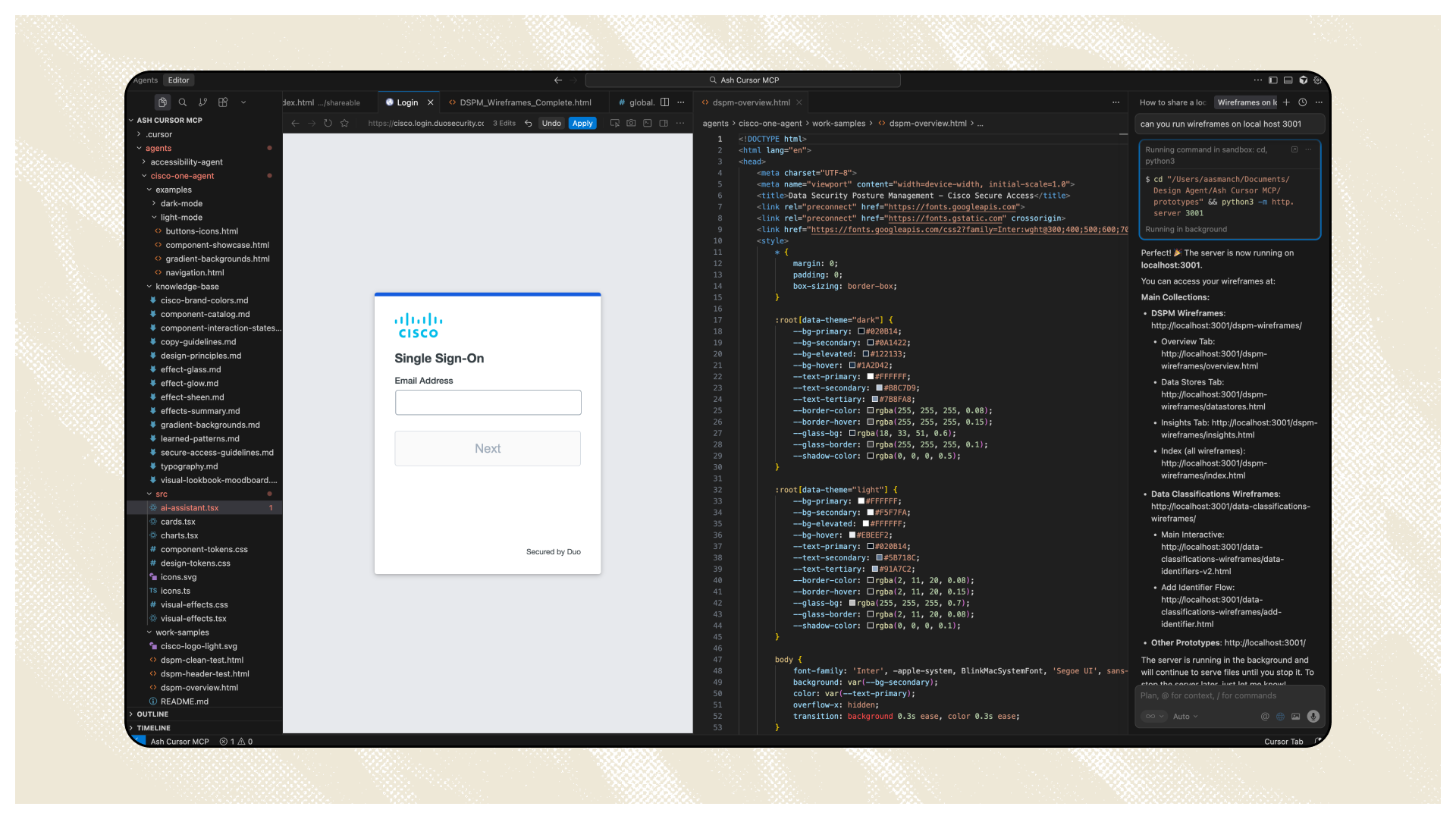
The wireframe agent, for instance, grew out of watching how much time was spent manually translating product screenshots into specs. Once we connected the agent to a local rendering server and our component library, it could generate interactive wireframes from a screenshot in minutes.
Results
The numbers tell part of the story:
- 48+ designers actively using the system
- 75%+ adoption rate across the design org
- 60% reduction in time spent reporting UX accessibility tickets
- ~2x faster automated file cleanup and documentation
- ~3.5x increase in actionable insights surfaced per feature
But the more qualitative shift mattered just as much: designers started spending more time in high-leverage creative work. The system quietly absorbed the operational overhead that had been taxing the team for years.
As Sofiia Haletska from our team iterates
...this saved me hours every week on accessibility reviews alone. It feels like having a teammate who never sleeps.
What's Next: The Claude Code Frontier
The next chapter is already in motion. We're exploring Claude Code as the ideation and validation layer for design work - bringing AI-assisted development into the design process itself, not just as a downstream handoff.
The vision: a designer can describe a UI concept in natural language, and the system can prototype, test, and iterate on it in code - rapidly validating ideas that previously required an engineering sprint to prove out. This closes the loop between imagining something and knowing if it works.
We're also looking at expanding the agent network to cover:
- Content and copy generation grounded in brand voice guidelines
- Design QA automation - agents that compare live product screens against DS specs and flag drift automatically
- Cross-agent memory - so that insights from the Research Agent inform the Studio Agent's output without the designer having to broker that connection manually
The broader ambition is an orchestration layer that functions less like a tool and more like an embedded design intelligence - something that knows your team, your system, your users, and your history, and applies that knowledge at every step of the design process.
We're not building AI that replaces design thinking. We're building AI that makes design thinking faster, better-informed, and more widely available across the team.
Reflection
This project changed how I think about my role as a design manager. The highest-leverage thing I could do for my team wasn't to review more work or run more critiques - it was to build infrastructure that multiplied their capacity.
Ash started as a hackathon idea. It became a platform. And it's still growing.
The lesson I'd carry into any design leadership role: the best way to enable a team is often to build the system that has their back.